

The TOM Global Movement is a network of change-makers dedicated to improving the lives of millions of people facing neglected challenges and unmet needs. This movement is powered by TOM communities: groups of individuals and organizations inspired by TOM's vision and driven to take action.
TOM communities bring together Need-Knowers and Makers from diverse backgrounds, including engineering, design, healthcare, and beyond. These cross-disciplinary teams collaborate to create practical, affordable solutions for real-life problems.
The movement spans both geography and theme with programs facilitated through Central Operating Hubs and Institutional & Community Anchors. With operations across the globe and in a wide range of communities, TOM has grown into a truly global initiative. Since its founding, TOM has been active in 193 communities across 44 countries—and continues to grow.
What makes tom a movement?
We define a Movement as a community of people inspired to take action-bottom-up- based on a shared vision, approach, objectives and values. Every community should blaze its own path toward serving the TOM Vision, within the guidelines provided by the TOM Global team and the TOM Playbook.
The TOM Movement is not managed top-down. Rather, the goal of the TOM Global Team, as stated in its mission statement, is “to inspire and support a global network of communities of innovators…. ” We do so by sharing all the information and insights that we have.
Central OPERATING HUBS
TOM’s operations are anchored in two key geographical centers that serve as incubators of TOM communities globally and hubs for innovation, manufacturing, and distribution of solutions. Together, the centers provide leadership and guidance for TOM’s communities, develop TOM’s product development and activity methodologies, and ensure the quality of all solutions developed by within the global network.

TOM USA | New York City
New York City is the headquarters of TOM Global, overseeing worldwide programming and the expansion of TOM across the Tri-State area, the United States, and internationally. TOM USA brings in best practices and knowledge from Israel’s pioneering work and adapts them for broader global impact. The soon-to-launch TOM Makerspace in NYC will serve as the hub of the NYC ecosystem and as an innovation and development center ensuring high-quality solution development and documentation of TOM’s open-source portfolio.The NYC hub leads flagship programs like TOM@University and the Global Innovation Challenge (GIC) and provides direct capacity building, training, and knowledge transfer to TOM communities worldwide. Additionally, TOM NYC organizes and co-hosts local activities such as Makeathons, Developer Groups, and Build Workshops, either independently or in collaboration with TOM communities.

TOM Israel | Tel Aviv
The TOM Innovation Center (TOMIC) in Tel Aviv was the original innovation and manufacturing & distribution (M&D) center and continues to serve as a regional incubator for TOM communities across Israel and the Middle East. Led by a team of program leaders, engineers, and product developers, TOMIC TLV hosts Makeathons, Developer Groups, and product development workshops, while also serving as a model makerspace for the TOM Global network.
TOMIC TLV is a key site for manufacturing and distributing TOM Products and for welcoming international visitors and delegations seeking insights into TOM’s innovation model. Like its NYC counterpart, TOM Israel provides capacity building, training, and advisory support to TOM communities worldwide Since October 7, 2023 TOM has focused its work in Israel developing solutions for wounded soldiers, civilians, and families; strengthening TOM’s open-source portfolio of solutions, allowing makers, hospitals, and rehabilitation centers throughout Israel, and worldwide, to manufacture and distribute them; and supporting displaced and unprotected families by providing quick improvements to safe rooms and living spaces, ensuring they are accessible and protected in times of emergency.
INSTITUTIONAL
& COMMUNITY
ANCHORS
Global Innovation Challenge
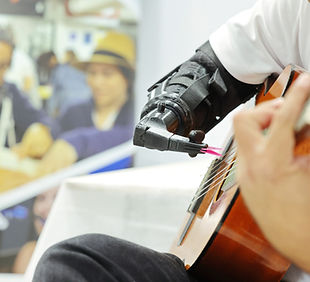
The TOM Global Innovation Challenge (GIC) is an annual, multi-month competition among makers and students to create open-source, affordable, and accessible solutions to challenges faced by people with disabilities. Teams from around the world compete to create impactful innovations that will help people of all abilities lead more independent, fulfilling lives. In four years, the TOM Global Innovation Challenge has established itself as a top-tier innovation competition that challenges the brightest young minds in the fields of engineering, design, and paramedical professions. Together, they created hundreds of socially impactful innovations that directly benefit the lives of people with disabilities in their communities.

TOM@University
Universities and higher education institutions play a crucial role at TOM by providing academic resources, research capabilities, and innovative thinking. The Tikkun Olam Makers University Program (TOM@University) is a global network of student-led innovation communities on university and college campuses working to improve people’s lives by making affordable open-source technology accessible to all. The program includes three main components: the TOM Fellowship Program; the TOM Faculty Forum; and the Fellowship Alumni Network.
The TOM Fellowship Program is a 9-month International leadership program that supports student leaders – known as TOM Fellows – who seek to apply technology and innovation to carry out TOM activities on their campuses. TOM Fellows harness the skills and creativity of students and faculty, along with the fabrication capabilities on their campus to create innovative assistive technology.

TOM@CARE
Care centers form the backbone of the TOM ecosystem, offering specialized services and facilities for individuals with disabilities. Their extensive experience in catering to the needs of people with disabilities allows them to provide valuable insights into the challenges faced and potential solutions required. Care centers contribute to the ecosystem by serving as testbeds for prototypes and offering real-world feedback. Care centers act as a direct link between the TOM communities and people with disabilities. They work closely with the development teams to identify specific needs and ensure that the solutions being created align with the practical requirements of their patients. Care centers also facilitate user testing and gather feedback, enabling iterative improvements to the open-source solutions.

TOM@SCHOOL
Schools are important stakeholders in the TOM ecosystem as they encourage young minds to think creatively and contribute to the development of open-source solutions that address the needs of people with disabilities. By integrating TOM principles into their curriculum, schools empower the next generation to drive positive change in the field of assistive technology. Students participate in design thinking workshops, collaborative projects and manufacturing and distribution activities, allowing them to learn about the challenges faced by people with disabilities while developing and distributing innovative solutions.

TOM@Corporate
Corporations bring their resources, expertise, and infrastructures to the TOM ecosystem. Through strategic partnerships and sponsorships, they provide financial support, mentorship, and top level talent. Corporate entities actively encourage talent participation in the TOM Ecosystem, both through regional or national programs and silo initiatives. By involving their employees in the solution development process, corporations tap into their diverse skill sets, creativity, and problem-solving abilities. By providing platforms for talent to participate, corporations not only contribute to the success of the TOM ecosystem but also nurture a culture of social responsibility and innovation within their own organizations.